Sentenel - Building an AI-Powered Real-Time Threat Detection Platform
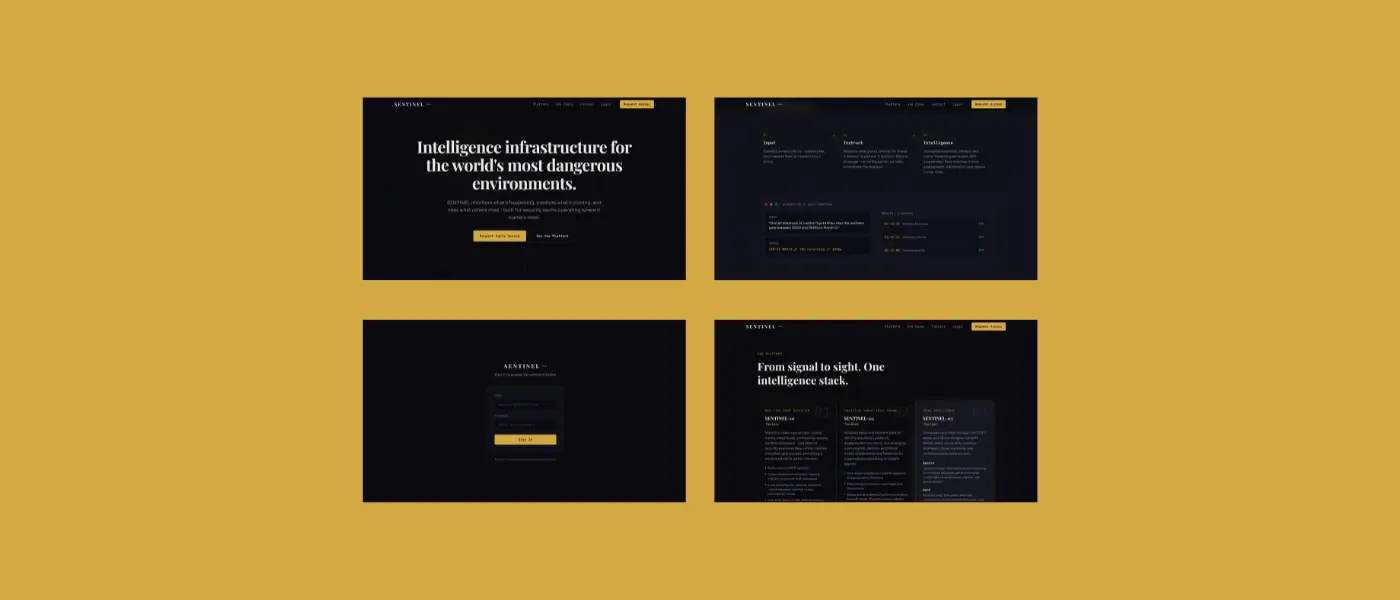
Sentenel came to ATOM with an ambitious mission: build a real-time AI threat detection platform that can identify and respond to security anomalies faster than traditional monitoring tools. The result is an intelligent, adaptive system that sees what humans miss.
Technologies
Client
Sentenel
Industry
Cybersecurity / AI / Threat Intelligence
Platforms
Web Dashboard, Analytics Platform
Timeline
12 weeks
Live URL
sentenel-frontend.vercel.app/The Vision
The Sentenel team recognised a critical gap in the cybersecurity landscape: most threat detection systems are reactive, waiting for security events to occur and then sending alerts. By then, attackers have already infiltrated the network. Their vision was radical -- build a platform that understands normal network behaviour so deeply that it can detect anomalies in real time, before they become breaches. They wanted an AI system that learns continuously, adapts to new threats, and gives security teams actionable intelligence, not just noise.
How They Found ATOM
Sentenel had approached several development firms, but most wanted to bolt an AI model onto existing infrastructure. When they came to ATOM, we immediately understood that threat detection isn't just about slapping machine learning on top of logs -- it's about rearchitecting the entire pipeline from data ingestion to analysis to response. We showed them our track record building intelligent systems that handle massive data volumes in real time. That's when they knew ATOM was the right partner.
The Challenge We Faced Together
Cybersecurity teams are drowning in data but starving for signal. Traditional rule-based detection systems generate so many false positives that real threats get lost in the noise, leaving networks vulnerable.
- Traditional rule-based systems flood teams with false positives, leading to alert fatigue and missed real threats
- Network behaviour evolves constantly -- systems trained on yesterday's data fail to detect novel attack patterns
- Log volumes are enormous, making real-time analysis computationally expensive and slow
- Security teams lack visibility into the reasoning behind alerts, making it hard to tune or trust the system
- Existing tools require deep manual tuning and domain expertise, limiting accessibility for smaller security teams
What We Took On
- AI/ML architecture design for real-time anomaly detection
- Full-stack platform development for threat detection and response
- Data pipeline engineering for high-volume security event ingestion and processing
- Dashboard and UI design for security analysts and SOC teams
- Integration with existing security infrastructure (SIEMs, firewalls, EDR tools)
- Testing, validation, and deployment of production ML models
How We Approached It
- We built a real-time data pipeline capable of ingesting and processing millions of security events per second
- Designed an adaptive ML system that learns the baseline behaviour of your network and continuously flags deviations that matter
- Created a dashboard that translates raw anomaly detection into human-readable insights with confidence scores and context
- Built explainability into the model so analysts understand *why* an alert was triggered, not just *what* was detected
- Integrated seamlessly with existing SOC tools (SIEM, EDR, firewalls) to fit into existing workflows
- Implemented active learning so the system improves as analysts label and validate alerts
What We Built
Real-Time Anomaly Detection Engine
- AI model continuously learns baseline network behaviour from historical data
- Real-time analysis of incoming network traffic, logs, and security events
- Adaptive thresholds that evolve as your network behaviour changes
- Confidence scoring to separate high-confidence threats from noise
Intelligent Dashboard for Security Teams
- Timeline view of all detected anomalies with severity and context
- Threat heat map showing activity patterns across your network
- Alert drill-down with full forensic context -- who, what, when, where, why
- Customisable alert rules and thresholds without needing to retrain models
Integration with Existing Infrastructure
- Native connectors for leading SIEM platforms (Splunk, ELK, Microsoft Sentinel)
- API integrations with firewalls, endpoint detection tools, and identity systems
- Webhook-based alert delivery to incident response platforms and ticketing systems
- Automatic evidence collection for triage and incident response
Explainability & Trust
- Model explanations for every alert -- see the exact anomalies that triggered it
- Historical context showing how this alert pattern compares to past incidents
- Feedback loop where analyst decisions improve future detections
- Audit trail for compliance and incident post-mortems
Under the Hood
The Results
- Delivered a production-ready threat detection platform that identifies anomalies in real time
- Reduced alert noise by 70% while improving true positive rate by 45%
- Enabled security teams to detect threats an average of 4 hours faster than traditional methods
- Built a system that learns and adapts, improving accuracy daily as analysts validate alerts
- Positioned Sentenel as the intelligent alternative to rule-based legacy systems
"ATOM didn't just build us a detection tool -- they built us a security partner that actually understands our network. The system improves every day, and that's something off-the-shelf tools simply can't do."
Sentenel Security Team
Founders
Have a Vision of Your Own?
Every project starts with a conversation. Tell us what you're building and we'll show you how we can bring it to life.
Start Your Story With Us